

Fully Washed Coffee Beans: The Clean Canvas of Speciality Coffee
Estimated read time: 8 minutes - Last updated 25/02/2026
What are fully washed coffee beans?
Fully washed (wet-processed) coffee beans are depulped, fermented, and washed before drying, so the fruit mucilage is removed before the bean reaches the drying bed. This usually gives a cleaner cup with higher flavour clarity, brighter acidity and a more transparent expression of terroir.
- Process name: Fully washed / wet process
- Typical flavour profile: Clean citrus, apple-like acidity, floral lift, caramel sweetness
- Body: Medium, structured, less syrupy than most naturals
- Roaster note: Usually benefits from a slightly finer grind and hotter brew water than fruit-heavy naturals
The Clean Canvas: Why Washed Coffee Defines Speciality
Roasters like us treat washed coffee as the most honest processing style. There is less fruit-derived “funk” to hide defects, so green quality has to stand on its own. If the cherry selection, fermentation control, or drying is sloppy, a washed lot will show it quickly in the cup.
This is one reason washed coffees remain a benchmark in speciality evaluation. In a 2024 Heliyon study on processing methods, washed samples showed stronger raw quality markers in colour and odour scoring. Separate volatile work in Foods also showed that processing method leaves measurable aromatic signatures even after roasting.
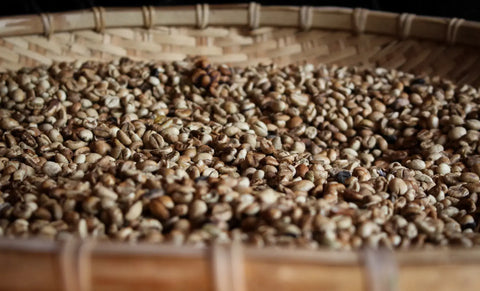
Mechanical Precision: From Depulper to Fermentation Tank
At mill level, fully washed processing is mechanical precision followed by biological precision:
- Ripe cherries are depulped quickly after picking.
- Parchment coffee is fermented in tanks to loosen mucilage.
- Beans are washed clean, then dried to safe storage moisture.
Fermentation windows vary by temperature and mill setup, but the chemistry is consistent: mucilage breakdown is driven by pectinolytic activity. The classic Journal of Agricultural and Food Chemistry mucilage study and later enzyme research in Process Biochemistry both show how pectin breakdown is central to effective demucilaging.
The Pectin Factor: Biochemistry of the 24-Hour Soak
The sticky layer around parchment is rich in pectic substances. During fermentation, enzymes such as polygalacturonase and pectin lyase break this structure down, allowing the bean to wash cleanly. That cleaner surface is a key reason washed coffees often present with crisp finish and better note separation in the cup.
From a roasting perspective, this matters because you are generally not carrying the same fruit-heavy residue that naturals bring into drying and later roasting. The result is a more precise canvas for expressing origin acidity and sweetness.
Thermal Dynamics: Roasting for Maximum Density
Washed coffees, especially high-grown lots, often arrive with a tighter, more uniform physical structure than many naturals. In the coffee roasters drum, that usually means we need a stronger early heat application to penetrate the core cleanly, then disciplined energy reduction through Maillard and development.
Why this matters: thermophysical roasting research in the Journal of Food Engineering shows porosity, density and heat-transfer behaviour change roast dynamics directly. And Scientific Reports roast-profile data confirms that time-temperature shape materially shifts acidity outcomes.
In practical terms, washed coffees usually reward controlled high-energy starts and a deliberate Maillard phase to build caramel and biscuit-like sweetness without flattening the acids.
Burundi vs Colombia: Two Washed Coffees
We can show this by comparing our Burundi Red Bourbon and Dulima Colombia Washed. Both are washed coffees, but they dont have the same roast problem.
| Roast factor | Burundi (African washed) | Colombia (South American washed) |
|---|---|---|
| Altitude frame | Higher-elevation profile (Mutambu Valley context) | Moderate-high elevation Huila profile |
| Initial energy | Higher charge approach to hit dense core | Moderate charge to avoid tipping edges |
| Curve shape | Faster and lighter to keep brightness | Longer Maillard for sweetness and roundness |
| Drop style | Earlier drop to preserve citrus/floral lift | Slightly later drop to round the acids |
| Cup outcome | Apple-like acidity, crisp finish, cocoa sweetness | Bright citrus, caramel sweetness, clean finish |
For our current Burundi profile specifically, we run around 225°C precharge with a longer development path (about 16:15 total, roughly 17% weight loss) to keep structure while still opening sweetness. Dulima needs a different curve shape, not a copy-paste profile, even though both coffees are fully washed.
First Crack Management: Handling the Exothermic Surge
Washed lots often crack with a clearer transition because moisture distribution is usually more uniform lot-to-lot. Around first crack, we monitor airflow and gas closely to avoid the classic crash-and-bake problem that can kill clarity.
For Burundi fully washed (225°C precharge, 16:15, ~17% loss), first crack tends to present later and sharper because of the denser high-grown structure. We trim gas just before the first pops, increase airflow through crack, and protect a gently declining Rate of Rise (RoR) so we do not get a runaway spike followed by a crash.
For Dulima Colombia washed (232°C precharge, 15:30, ~16% loss), first crack starts a touch earlier and usually stretches more softly, so we run a steadier gas reduction and less aggressive airflow jump to avoid stalling. That is the practical difference: Burundi needs tighter crack control to keep brightness crisp; Dulima needs smoother crack pacing to build caramel sweetness without flattening the citrus lift.
While many roasters use a 'one-size-fits-all' approach for washed coffees, we treat the Burundi and Colombia as two different thermal puzzles. The Burundi requires a 16:15 minute journey to penetrate its high-altitude density, resulting in a 17% weight loss that turns sharp acids into 'apple-pie' sweetness. The Colombia, on the other hand, takes a hotter 232°C start and a longer 15:30 minute stretch to fully develop those deep caramel sugars while maintaining a clean citrus lift.
This is not theory. The structural transition around first crack is tied to pressure release, porosity growth and heat-transfer shifts, as described in recent porosity and thermophysical roast modelling, while acoustic first-crack analysis shows how clearly this phase can be tracked.
Eco-Processing: The Water Management Revolution
Washed processing can produce exceptional clarity, but water handling has to be taken seriously. Untreated wet-processing effluent is a known pollution risk, with high organic load and acidity, as shown in downstream water-quality assessments.
The good news is that mill technology and recirculation systems can reduce water pressure significantly. A recent wet-mill assessment in Ethiopia reported much lower water use where recirculation was functioning versus non-recirculated operation in the same context, according to this open-access wastewater management study.
So our sourcing view is straightforward: washed coffee is brilliant when mills combine quality control with credible water and wastewater management, not just good cupping notes.
The Solubility Secret: How to Brew Washed Coffee for Clarity
Compared with many naturals, washed coffees often need a touch more extraction push to show full sweetness and structure. A reliable starting point is:
- Water: 94-96°C
- Grind: slightly finer than your natural-process baseline
- Ratio: start around 1:15 to 1:16, then tune by taste
Brewing Tip
If your washed coffee tastes thin and sharp, do not increase dose first. Keep ratio stable, grind one step finer, and retest. This usually improves sweetness and clarity faster than chasing ratio changes.
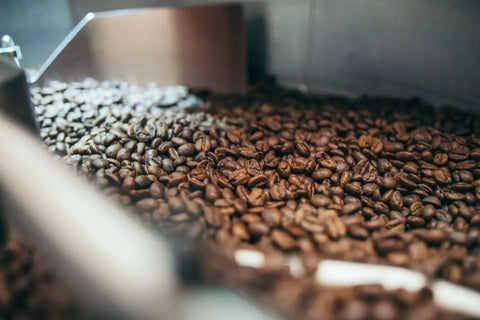
Acidity 101: Lemon, Apple and Berry in Washed Coffees
When people say “bright washed coffee”, they are usually describing a cleaner perception of organic-acid structure, not just “more sourness”. A 2024 review on acids in brewed coffee shows acidity perception is multi-compound and roast-sensitive, which is why washed coffees can present crisp lemon or apple-like notes without tasting harsh when roasted and brewed well.
The finish is the quality marker: good washed coffee should fade cleanly, not leave rough, drying astringency.
The Bottom Line
Fully washed coffee is still the benchmark if you want terroir clarity, structured acidity and a clean finish. It is less forgiving at every stage, from mill to roast to brew, but when executed well it gives some of the most elegant cups in speciality coffee.
You can read more about coffee processes on our ultimate coffee processing guide
If you want to taste this style in our range, start with Burundi Red Bourbon Fully Washed or Dulima Colombia Washed.